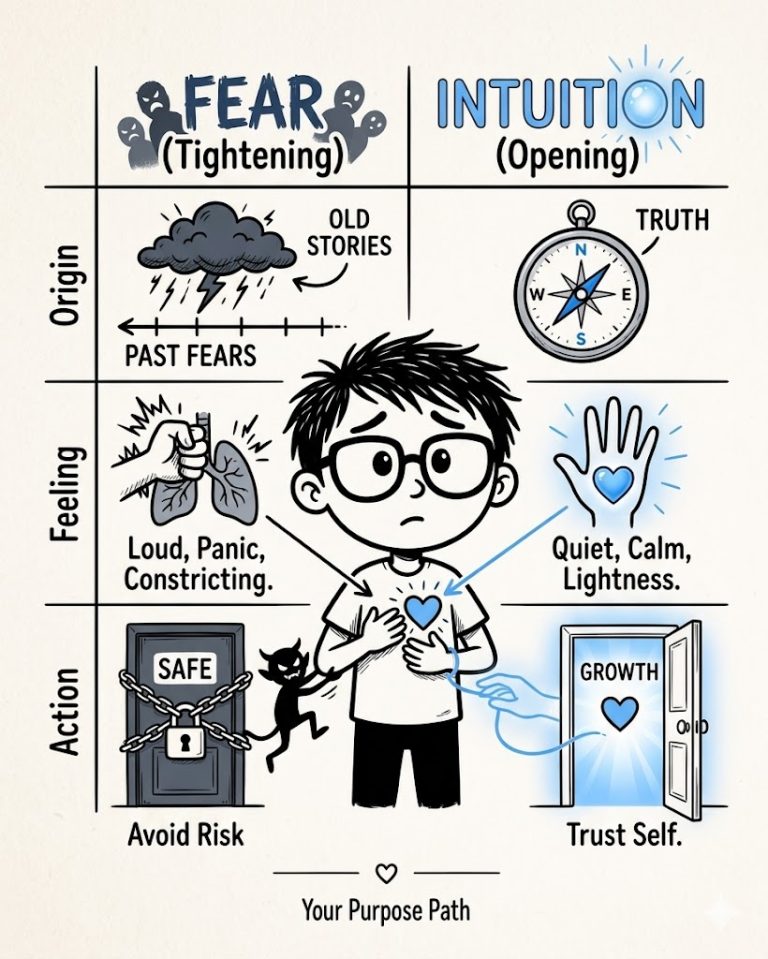

You are either in a hard season worth staying through or a wrong direction worth leaving. The problem is they feel the same.
The advice you got was probably one of two things. Push through, because everything worth having is hard and discomfort is not a sign you are on the wrong path. Or walk away, because life is short and staying somewhere that drains you is not noble, it is just slow damage.
Both pieces of advice are true.
They are also useless without a way to tell which situation you are actually in.
Because from the inside, pushing through a hard season and stubbornly staying in the wrong thing feel almost identical. Both are uncomfortable. Both generate doubt. Both come with days when you question whether you made the right call. Both look, to everyone outside, like you are either persisting or suffering, depending on how things eventually turn out.
The difference is not in the feeling.
The difference is in the diagnosis.
And most people skip the diagnosis and go straight to the question of whether to stay or go.
That is why they end up with the wrong answer.
Why the Standard Advice Fails You
The push-through camp will tell you that quitting is a habit, that the discomfort you feel is the price of anything worth building, and that most people give up right before the breakthrough.
That is sometimes true.
The quit-fast camp will tell you that sunk cost is a trap, that staying somewhere that is not working just because you have already invested in it is irrational, and that decisive pivots are a sign of self-awareness, not failure.
That is also sometimes true.
The problem is that both camps are arguing about the response before examining the situation.
Whether you should push through or quit depends entirely on what is actually wrong.
And what is actually wrong falls into a small number of distinct categories that require completely different responses.
Collapsing all of them into a single stay-or-go decision is how capable people end up leaving things they should have stayed with and staying in things they should have left.
The Four Things That Actually Make Work Hard
Before you decide to push through or quit, you need to name which of these is the actual source of the difficulty.
Resistance.
This is the discomfort of doing something real.
Any direction worth committing to has a point where the initial energy fades, and the actual work begins. It gets harder, slower, less exciting. Progress is not visible yet. The gap between where you are and where you want to be feels wide. You start wondering whether the direction was right.
This is not a signal to quit.
This is what every legitimate direction feels like at the point where real commitment is required.
Resistance is not evidence that you are in the wrong place. It is evidence that you have reached the part that matters.
Misalignment.
This is different.
Misalignment is when the direction itself is wrong for you. Not hard. Wrong. The work does not fit who you are, what you value, or where you are trying to build. You could push through the discomfort and succeed, and the success would not feel like the right win.
This is the competence trap. You are capable of doing the work. You have done it well. But something in you knows that this is not the thing you are supposed to keep building your life around.
Misalignment does not get better with more effort.
It gets more expensive.
Burnout.
Burnout is a state, not a verdict.
It distorts everything. Options that would look reasonable on a rested mind look unbearable under burnout. The discomfort of your current situation gets amplified. The appeal of anything different gets inflated.
Burnout makes the wrong direction look wrong in the right way.
Which means decisions made in burnout tend to be decisions made with bad data.
If the primary symptom is exhaustion, the first move is not a career decision. It is recovery. What you feel after a week of genuine rest is more reliable than anything you feel in the middle of depletion.
A legitimate bad fit.
Sometimes the role, the organization, the structure, or the environment is the problem.
Not the field. Not you. The specific context you are operating in.
This is one of the most commonly misdiagnosed situations in career decisions. A bad workplace makes good work feel wrong. Poor leadership makes a strong calling feel like the wrong direction. A broken organizational culture can make even deeply aligned work feel miserable.
Before you conclude the whole direction needs to go, examine whether it is the direction or the container.
Persistence and Stubbornness: The Difference That Matters
Both involve staying with something that is difficult.
Here is the practical distinction.
Persistence is staying with a direction that is genuinely yours, through normal difficulty, because the evidence still supports the direction even when the experience is hard.
Stubbornness is staying with a direction that no longer fits, past the point where honest evidence has been telling you to adjust, because leaving feels like admitting something you do not want to admit.
Persistence moves you through the hard season.
Stubbornness keeps you in a season that should have ended.
The question that separates them is not how you feel.
The question is whether the honest evidence still supports the direction.
Not whether it is comfortable. Not whether you are certain. Whether the evidence, assessed honestly, still points the same way it did when you started.
If it does, the discomfort is resistance. Push through.
If the evidence has shifted and you have been arguing with it for a while, that is worth naming.
What Honest Evidence Actually Looks Like
This is where most people go vague, so it is worth being specific.
Evidence that supports pushing through:
The direction still aligns with your values and what you are actually trying to build. The difficulty is about the hard work of the thing, not about the thing itself being wrong. The people closest to what you are trying to do confirm that this phase is normal. You still believe in the destination, even if the current moment is hard. When you imagine successfully reaching the goal, it still feels like the right win.
Evidence that supports stepping back or leaving:
The direction has shifted away from alignment with your values and is not going to shift back. You have already made adjustments and the core problem remains. The cost of staying is becoming higher than the cost of leaving in ways that affect your health, relationships, or integrity. You no longer believe in the destination itself, not just the current difficulty. When you imagine succeeding here, the success feels hollow.
The key word throughout is honest.
Most people already have the evidence.
They are negotiating with it.
The Question That Cuts Through the Noise
When everything feels unclear, one question tends to cut through faster than a full analysis.
Am I leaving because this is genuinely wrong, or because it has gotten uncomfortable?
If you sit quietly with that question and answer it honestly, the direction usually becomes clearer.
Not comfortable. Clear.
Because the answer to that question is almost always available.
You just have to be willing to hear it.
If the Direction Is Career-Related
The push-through-or-quit question is one of the most loaded questions in a career decision because it carries financial weight, identity weight, and the fear of being wrong in a way that costs you significantly.
That weight tends to make the thinking murkier, not cleaner.
The Career Reset is a structured workbook built specifically for the person sitting in this exact moment.
Twelve tools across four stages: Diagnose, Decide, Align, Move.
The Diagnose stage in particular is built to help you sort what is actually wrong before you decide what to do about it. Because the wrong diagnosis sends you into the wrong move, and that is expensive in a way that more deliberation does not fix.
Decide what is actually wrong first.
Then decide what to do about it.
That order matters more than most people realize.