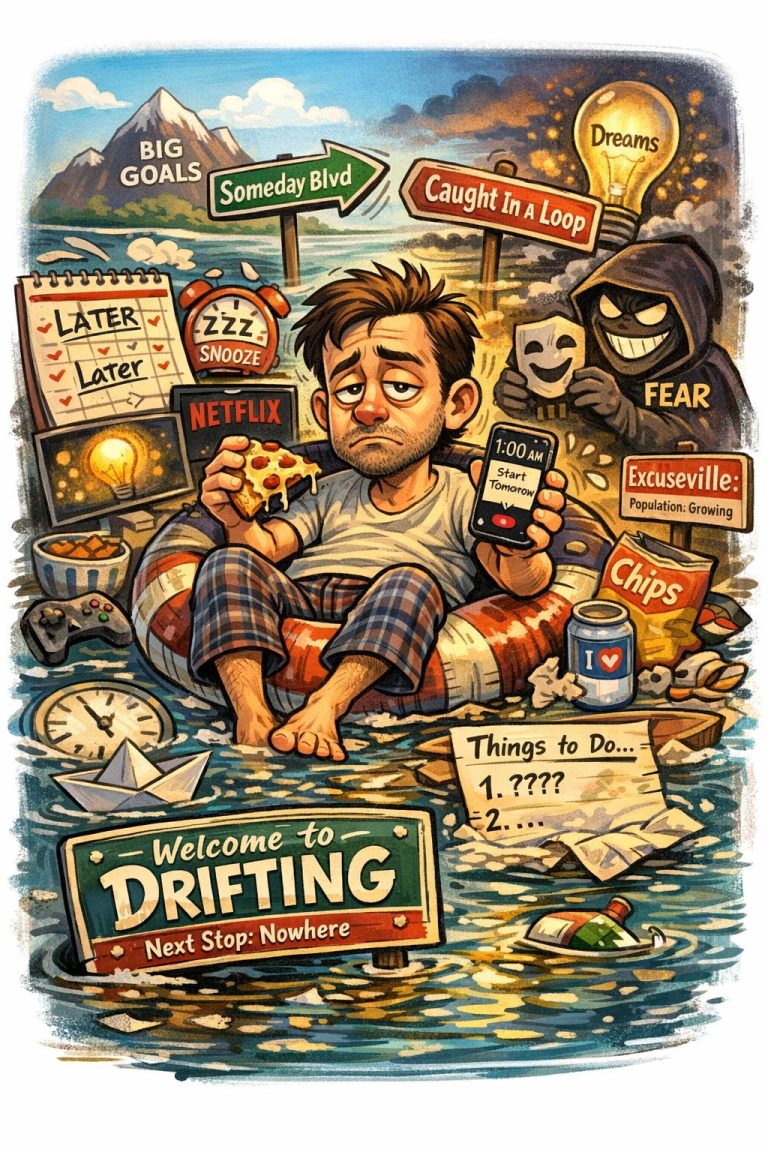
Some people need a career change.
Some people need a better job.
Some people need to stop Googling “best careers for people who like helping others but also need flexibility and do not want to be broke, bored, or trapped in meetings until retirement.”
That last one may or may not be personal.
Here is the truth: feeling stuck in your career does not always mean you are in the wrong field. It does not always mean you need to quit tomorrow, go back to school, start a business, move across the country, or suddenly discover your “one true calling” while drinking herbal tea near a window.
Sometimes you do not need a dramatic reinvention.
You need a career reset.
A career reset is not panic dressed up as wisdom. It is not burning everything down because Monday annoyed you. It is not quitting your job because one coworker forwarded another email with “just circling back.”
A career reset is a pause.
It is a filter.
It is a way to look at your work, your strengths, your options, and your life without turning your brain into a browser with 71 tabs open.
Because if you have too many ideas, too many opinions, too many job boards saved, and too little trust in your own judgment, more career advice will not fix the problem.
You do not need more noise.
You need a better way to sort it.

What Is a Career Reset?
A career reset is the process of stepping back from your current career situation so you can figure out what is actually wrong, what still fits, what needs to change, and what your next best move should be.
Notice the phrase “next best move.”
Not perfect move.
Not forever move.
Not the move that makes every person in your life nod approvingly and say, “At last, she has found her destiny.”
That is too much pressure.
A career reset helps you ask better questions before you make expensive, emotional, or avoidant decisions.
Questions like:
What part of my career is actually not working?
Am I bored, burned out, underpaid, underused, unsupported, or afraid?
Do I want a new career, or do I want a healthier version of my current one?
Am I chasing purpose, flexibility, money, peace, status, or escape?
What am I good at that I keep dismissing because it feels too natural?
What direction keeps coming back no matter how many times I try to ignore it?
That is where career clarity begins.
Not with another random personality test.
Not with scrolling job boards until your brain turns into soup.
With honest sorting.
Why Career Clarity Feels So Hard
Career clarity feels hard because most people are not just making a job decision.
They are carrying identity questions, money fears, family expectations, old labels, comparison, regret, and the quiet terror of choosing wrong.
That is not a simple pros and cons list.
That is a mental circus with Wi-Fi.
You may be asking, “What career should I choose?”
But underneath that question, you may really be asking:
What if I waste more time?
What if I am too old to start over?
What if I choose wrong?
What if I am not as talented as I think?
What if I succeed and people expect more from me?
What if I fail and everyone sees it?
What if I am meant for more, but I never figure out what “more” is?
That is why career clarity can feel so heavy.
It is rarely just about work.
It is about trust.
Trusting your gifts.
Trusting your judgment.
Trusting your ability to make a decision without a guarantee.
Trusting that you can take one step without needing the entire staircase lit up like a Broadway stage.
Signs You Need a Career Reset
You may need a career reset if any of this sounds familiar:
You are constantly researching new paths but not choosing one.
You feel restless in your current work but cannot explain exactly why.
You have many interests and no clear filter.
You keep asking people what they think, then feel more confused after every opinion.
You are drawn to something new but keep dismissing it as impractical.
You feel guilty for wanting more because your current job is “fine.”
You are successful on paper but bored in your actual soul.
You keep saving career posts, programs, videos, and ideas but never act on them.
You are waiting for certainty before you move.
Let’s be clear about that last one.
Certainty is not a strategy.
Sometimes it is fear wearing business casual.
You do not need 100 percent certainty to take a wise next step. You need enough clarity to move responsibly.
Big difference.
The Biggest Career Reset Mistake
The biggest mistake people make during a career reset is trying to solve their whole life at once.
They ask:
What should I do with my life?
Should I quit?
Should I stay?
Should I go back to school?
Should I start a business?
Should I become a coach?
Should I move?
Should I monetize my skills?
Should I update my resume?
Should I just open a bakery in Vermont and sell muffins to emotionally stable people?
This is how your brain ends up with 71 tabs open and not one clean decision.
The better question is not, “What should I do with my entire life?”
The better question is:
What is the next career decision I actually need to make?
That question changes everything.
Maybe the next decision is not quitting.
Maybe it is identifying what you want more of and less of.
Maybe it is testing one idea for 30 days.
Maybe it is having one honest conversation.
Maybe it is updating your resume.
Maybe it is building a small side project.
Maybe it is admitting that the career path you keep researching is the one you are afraid to pursue.
You do not need to solve your whole future today.
You need to stop using the size of the future as an excuse to avoid the next step.
Step 1: Name What Is Actually Wrong
Before you change careers, diagnose the real problem.
Because “I hate my job” can mean many different things.
It can mean:
I hate my boss.
I hate the schedule.
I hate the pay.
I hate the culture.
I hate the lack of growth.
I hate being underused.
I hate being emotionally drained.
I hate pretending I care about work that does not matter to me.
I hate that I am capable of more but have no plan.
Those are different problems.
Different problems require different solutions.
If you confuse the problem, you may choose the wrong fix.
You may leave a field you actually enjoy because one workplace drained you.
You may go back to school when you really needed experience.
You may start a business when you actually needed boundaries.
You may stay stuck because you think every change requires a dramatic leap.
Start by naming the real issue.
Not the polished version.
The honest one.
Step 2: Separate Escape From Direction
This part matters.
Sometimes you are not being called toward something.
You are running away from something.
That does not mean your desire for change is wrong. It means you need to slow down long enough to tell the difference.
Escape sounds like this:
I just need out.
Anything would be better than this.
I do not care what I do next.
I want to quit and figure it out later.
I am tired, so this entire career must be wrong.
Direction sounds like this:
This specific type of work keeps pulling at me.
I want to use these skills more.
I am noticing a pattern in what gives me energy.
I want to move toward work that fits my strengths, values, and season of life.
I am willing to test this, not just fantasize about it.
Escape wants relief.
Direction wants alignment.
You may need both, but do not confuse them.
Relief is not always a career plan.
Step 3: Identify Your Career Clarity Pattern
Most stuck people are not stuck in the same way.
Some people are overloaded with options.
Some are waiting for permission.
Some are terrified of choosing wrong.
Some are addicted to research.
Some are comparing themselves into paralysis.
Some know the answer but keep negotiating with fear.
This matters because your pattern determines your next move.
If you are overloaded, you need a filter.
If you are afraid, you need a small test.
If you are comparing, you need to cut outside noise.
If you are researching forever, you need a decision deadline.
If you are waiting for permission, you need to stop outsourcing your life to people who are not living it.
Career clarity is not just about finding options.
Most people have options.
The problem is choosing.
Step 4: Use a Filter Before You Chase Another Idea
Every career idea is not worthy of your time.
Read that again, especially if you are a multi-passionate person who thinks every interesting thing deserves a full business plan, a certificate program, a Pinterest board, and a color-coded notebook.
Interest is not the same as direction.
A good career reset requires filters.
Ask yourself:
Does this path fit my actual strengths?
Does it match the kind of life I am trying to build?
Does it solve a real problem I care about?
Can I test it before making a major commitment?
Am I drawn to the work itself, or just the image of the work?
Would I still care about this if nobody clapped?
That last question is rude but useful.
Some career ideas are real.
Some are fantasies with nice lighting.
Your job is to know the difference.
Step 5: Choose a Small Test, Not a Permanent Identity
One reason people stay stuck is because they treat every career decision like a lifelong identity contract.
You are not signing away your soul because you test an idea.
You can explore a path without announcing it to Facebook, ordering business cards, and changing your LinkedIn headline by Thursday.
Small tests create evidence.
And evidence is better than endless thinking.
Examples of small career reset tests:
Talk to three people doing the kind of work you are considering.
Take one low-cost course before applying to a degree program.
Volunteer or shadow before committing.
Create one sample project.
Update your resume for one target role.
Apply to five carefully chosen jobs and notice what you learn.
Start a small side offer before building an entire business.
Write down what gives you energy for two weeks.
Track what drains you, not just what annoys you.
You are not trying to force the perfect answer.
You are gathering clean evidence.
Step 6: Stop Asking Everyone
Feedback can help.
Too much feedback can make you useless.
There comes a point where asking more people is not wisdom. It is delay with better manners.
You already know this.
One person says, “Follow your passion.”
Another says, “Be realistic.”
Another says, “Go into tech.”
Another says, “Start a business.”
Another says, “Stay where you are. Benefits matter.”
Another says, “Have you considered nursing?”
Now you are not clearer.
You are just carrying six more opinions and one mild headache.
During a career reset, be selective.
Ask people who are wise, honest, and relevant.
Not people who are loud.
Not people who are projecting their fears onto you.
Not people who have never made the kind of decision you are trying to make.
And definitely not people who think stability is the same thing as fulfillment.
Listen carefully.
Then come back to your own judgment.
That is the part you cannot outsource.
Step 7: Decide What This Season Requires
A career reset should fit your actual life.
Not your fantasy life.
Not your Instagram vision board life.
Your actual life.
Your responsibilities.
Your finances.
Your energy.
Your family situation.
Your health.
Your time.
Your capacity.
Sometimes the right move is bold.
Sometimes the right move is boring.
Sometimes the right move is building slowly after work.
Sometimes the right move is staying for now, but no longer staying passively.
Sometimes the right move is leaving.
Sometimes the right move is learning, testing, saving, healing, or finally admitting that “fine” has become a cage with dental insurance.
A smart career reset does not ignore reality.
It works with reality while refusing to be ruled by fear.
Career Reset Questions to Start With
Use these questions as a starting point:
What do I already know that I keep pretending not to know?
What part of my work gives me energy?
What part consistently drains me?
What strengths do people keep noticing in me?
What career ideas keep coming back?
What have I researched repeatedly but not acted on?
What am I afraid will happen if I choose?
What am I afraid will happen if I stay the same?
What decision would I make if I trusted myself more?
What is one small test I can complete in the next 30 days?
Do not rush through those questions.
The point is not to sound deep.
The point is to tell the truth.
You Are Not Behind. You Are Probably Unfiltered.
A lot of people think they are behind because they have not found the perfect career path yet.
But often, they are not behind.
They are unfiltered.
They have taken in too much advice, too many options, too many success stories, too many fears, and too many opinions from people who do not have to live with the consequences.
So they keep spinning.
They call it research.
They call it prayer.
They call it being responsible.
They call it waiting for the right time.
But sometimes, it is just fear with a respectable outfit on.
A career reset helps you stop spinning and start sorting.
What fits?
What does not?
What needs to be tested?
What needs to be released?
What is the next responsible move?
That is the work.
Not glamorous.
Not instant.
But useful.
Final Thought
You do not need to figure out your entire career in one sitting.
You do not need to find the perfect title, the perfect plan, or the perfect guarantee.
You need to get honest, clear the noise, filter your options, and take the next responsible step.
A career reset is not about becoming a whole new person.
It is about finally paying attention to the person you have been ignoring.
The one who knows something needs to change.
The one who is tired of collecting options.
The one who does not need another tab open.
The one who needs a direction, a filter, and enough self-trust to move.
Start there.
Before you quit, stay, enroll, pivot, or spend another year circling the same decision.
Get the Free Stay, Quit, Pivot Filter
If your career decision keeps looping in your head, the problem may not be lack of information. You may need a cleaner way to compare your real options.
The Stay, Quit, Pivot Filter is a free 20-minute career decision tool that helps you score your options against six honest criteria: energy fit, income reality, identity alignment, practical feasibility, concern validity, and gut response.
No quiz. No personality type. No fluffy “follow your dreams” speech. Just your actual options, evaluated honestly.
Send Me the Free Career FilterTakes about 20 minutes. Gives you a real starting point.