Motivation has a pattern.
It shows up late at night when you’re full of good intentions.
It promises clarity, discipline, and a “new version of you.”
And then morning comes.
You’re tired.
Your schedule is already off track.
Your energy is gone.
Motivation doesn’t even leave a note. It just disappears.
That’s not a personal failure. That’s how motivation works.
The Motivation Myth (And Why It Keeps You Stuck)
We’ve been taught that change starts with motivation.
Get inspired.
Feel ready.
Wait for the right moment.
But motivation is emotional. It rises and falls with sleep, stress, hormones, mood, and life in general.
If consistency required motivation, nobody would have any habits at all.
James Clear says it clearly in Atomic Habits:
“You do not rise to the level of your goals. You fall to the level of your systems.”
Read that again.
Your problem isn’t a lack of desire.
It’s a lack of structure that works on bad days.
If Your Plan Needs Perfect Conditions, It’s Not a Plan
Most habit advice assumes:
- You’ll wake up energized
- Your schedule will cooperate
- You’ll feel focused and calm
- Life won’t interrupt
That’s not discipline. That’s optimism.
Real life looks like:
- Low energy
- Too many responsibilities
- Mental noise
- Limited willpower
A system that only works when everything goes right will collapse the moment life does what life always does.
The goal isn’t to become more motivated.
The goal is to build something you’ll still follow when you don’t feel like it.
Why Boring Habits Win (Every Time)
This part usually disappoints people.
Real progress is boring.
Repetitive.
Quiet.
It doesn’t feel dramatic in the moment. It doesn’t come with instant results. And it rarely looks impressive on the outside.
But it compounds.
Tiny actions, repeated consistently, create momentum. Not because they’re exciting — but because they’re doable.
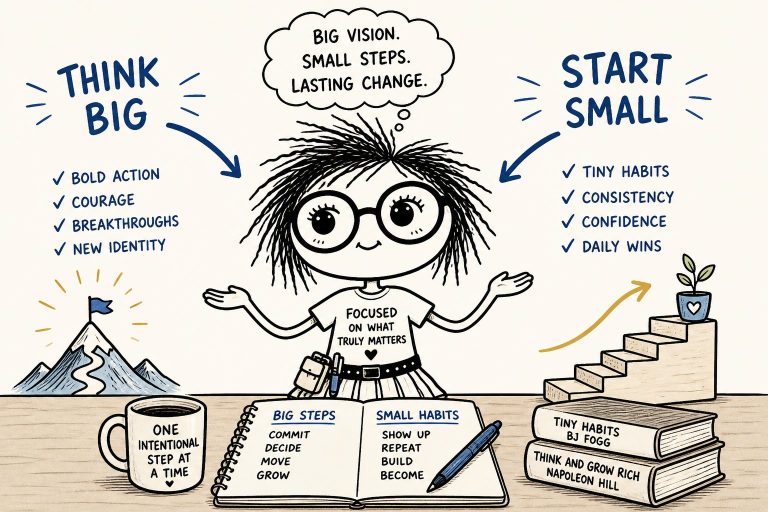
This is where Tiny Habits by BJ Fogg gets it right: behavior change succeeds when the habit is so small it’s almost impossible to skip.
Not heroic effort.
Not discipline marathons.
Just actions that fit into real life.
Build for the Version of You Who Is Tired
Most people design habits for their best selves:
- Focused
- Rested
- Motivated
That’s a mistake.
Design for the version of you who:
- Didn’t sleep well
- Feels overwhelmed
- Has decision fatigue
Ask yourself:
- What’s the smallest version of this habit I can do?
- What still counts on a bad day?
- What doesn’t require a pep talk?
That’s real discipline.
Not intensity.
Not hype.
Not vibes.
Motivation Isn’t the Engine. It’s the Bonus.
Here’s the reframe that changes everything:
Motivation doesn’t create action.
Action creates motivation.
Systems come first.
Momentum follows.
Once you stop waiting to feel ready, progress becomes predictable.
Not exciting — predictable.
And predictable progress beats motivational bursts every single time.
Where to Go Deeper (Without the Hype)
If this perspective resonates, two books explain it better than any quote ever could:
- Atomic Habits by James Clear — for understanding how systems shape behavior and how small changes compound into real results. 👉 See the book here
- Tiny Habits by BJ Fogg — for learning how to design habits so simple they survive low energy and busy seasons. 👉 See the book here
These aren’t motivational books. They’re practical manuals for real change.
If you’ve been stuck restarting, this is where to start building instead.
The Bottom Line
Motivation will hype you up at night and ghost you by morning.
Systems stay.
The people who quietly change their lives aren’t more disciplined or inspired. They just stopped relying on feelings and started building structures that work.
Not on perfect days.
On ordinary ones.
That’s how progress sneaks up on you.
If you’re done starting over and want a framework instead of motivation, these are two solid places to begin:
You cannot solve what you have not named.
Why You’re Still Stuck (It’s Not What You Think)
7 questions. Uncomfortably accurate. This is not a personality quiz. It is a diagnosis.
TAKE THE QUIZ →